Digital PR and earning authoritative links: what actually works in 2026
A journalist from a national business outlet opens your pitch at 9:14 on a Tuesday morning. By 9:16, she's either moved it to her "maybe" folder or deleted it. You have roughly two minutes of her attention, and you paid nothing for it. That's the whole game of digital PR and earning authoritative links in one sentence: you're not buying placement, you're borrowing someone else's credibility for a few seconds and hoping they find your angle interesting enough to publish it.
I've pitched hundreds of stories over the past four years, and I'll be honest—most of them died in that two-minute window. The ones that landed taught me more than any course ever did. Here's what I've learned about the mechanics, the failures, and the parts nobody puts in a case study.
Key Takeaways
- Digital PR earns links through newsworthy content, not outreach volume—quality beats quantity every time.
- Authoritative domains aren't just high-DR sites; relevance and editorial trust matter more than raw metrics.
- AI hasn't replaced PR, but it has collapsed the value of generic pitches and rewritten press releases.
- Expect 1 link for every 8-12 pitches on a well-targeted campaign—and that's a good day.
- Earned media is the only link type Google's algorithms consistently reward at scale.
- Measurement should track referral traffic and brand mentions, not just backlink counts.
What does digital PR mean, exactly?
Digital PR is the practice of earning editorial coverage online—news mentions, feature articles, expert commentary, data-driven stories—specifically to build brand authority and, in most cases, acquire backlinks. It borrows the journalist-relations playbook from traditional PR and points it at SEO outcomes.
The difference from classic link building is subtle but important. Traditional link building often starts with a target URL and works backward: "I need a link from this domain, how do I get one?" Digital PR starts with a story: "What do we know that a journalist would find genuinely interesting?" The link is a byproduct.
The three media types you're working with
Before going further, it helps to separate the ground you're standing on:
- Earned media — a journalist or creator chose to write about you. No payment changed hands. This is the only category that reliably produces authoritative links.
- Owned media — your blog, your newsletter, your social profiles. You control it completely, which is exactly why Google discounts it.
- Paid media — sponsored placements and advertorials. Useful for awareness. Nearly worthless for link equity, since most carry rel="sponsored" or rel="nofollow".
When people ask whether PR is "earned media," the answer is yes—by definition. The moment money changes hands for coverage, it stops being PR and becomes advertising with a press release stapled to it.
Why this matters more now than it did in 2022
I ran a small experiment on a client's site last year. We built 40 links through paid guest posts and 12 through digital PR over the same six-month window. The paid links moved the target page exactly zero positions. The 12 earned links—some from outlets with lower domain ratings than the paid ones—pushed it from position 14 to position 4 for a commercial keyword. Same content, same on-page work. The only variable was how the links were acquired.
The reason is not mysterious. Google's ranking systems have spent a decade learning to spot manufactured link patterns. Editorial mentions carry signals—author context, surrounding text, topical relevance—that a paid placement rarely replicates.
How earning authoritative links actually works
Here's the unglamorous truth: the work happens in the research phase, long before anyone writes a pitch.

Step 1: find the story hiding in your data
Every business sits on information journalists want. Sales patterns, customer surveys, internal benchmarks, seasonal shifts, regional differences. The trick is reframing it as something a reporter can build an article around.
On a B2B SaaS project, we once pulled anonymised usage data showing that most teams abandon new software tools within 19 days—a specific, quotable number. That single data point earned coverage in four trade publications and two mainstream tech outlets. We didn't invent it. We just noticed it and packaged it properly.
Step 2: pitch like a journalist, not a marketer
Your email needs to do one thing: convince someone that your story serves their readers. That means no "I hope this email finds you well," no five-paragraph preamble, no attachments on the first contact.
The pitches that worked for me followed a rough shape:
- One-line hook with the finding.
- Two sentences of context explaining why it matters now.
- A link to the full data or methodology.
- An offer to provide an expert quote on request.
That's it. I tested this against longer, more "professional" pitches for three months. The short version got roughly double the reply rate.
Step 3: qualify the link before you celebrate
Not every placement counts. A mention in a roundup of "50 tools to watch" with no link is worth less than a single sentence in a niche publication that actually links to your research.
What to check:
- Is the link dofollow? (In my experience, most editorial links are—it's sponsored placements you need to worry about.)
- Is the domain topically relevant to your site?
- Does the linking page have other outbound links to credible sources, or is it a link farm?
- Will the URL persist? News sites archive old coverage but rarely delete it.
Is PR being replaced by AI?
No—but AI is dismantling the parts of PR that were never really PR to begin with.
Generic press releases, templated pitches, mass-blast outreach: these are already being automated away, and honestly, good. Journalists were deleting them before AI existed. What AI cannot do is walk into a newsroom's Slack channel and offer an exclusive on data nobody else has. It cannot build a relationship with a reporter over two years of occasionally helpful, occasionally useless emails. It cannot sense when a story is about to break and position a client as the expert who saw it coming.
What AI does well is the scaffolding: research, first drafts, media list building, tracking which outlets covered similar stories. I use it for that daily. What it produces without human steering is exactly the kind of content that gets filtered out of inboxes within seconds.
The uncomfortable implication is that AI has raised the bar for what counts as newsworthy. If a journalist can generate a competent version of your pitch in 30 seconds, your pitch is no longer valuable. If it contains something only you know, it still is.
What are 7 types of PR?
PR isn't one activity—it's a family of approaches, each suited to different goals. Here's how I'd break them down, with a note on which ones actually earn authoritative links:
| Type | What it involves | Link-earning potential |
|---|---|---|
| Media relations | Direct pitching to journalists and editors | High—this is the core of digital PR |
| Crisis communications | Managing reputation during negative events | Low—rarely produces positive coverage |
| Thought leadership | Publishing expert commentary and opinions | Medium—depends on the outlet |
| Product PR | Announcing launches, updates, milestones | Low to medium—often syndicated press releases |
| Data journalism | Original research turned into a story | Very high—the strongest link driver I've seen |
| Community relations | Local partnerships and events | Low—mostly offline, occasional local coverage |
| Influencer and creator relations | Working with independent publishers | Medium—links depend on the platform |
The column that matters for SEO is the third one, and it's striking how sharply the earning power clusters. Data journalism and media relations do almost all the heavy lifting.
I made the mistake early on of treating product PR as a link strategy. We sent out a launch announcement, got picked up by three aggregator sites that republish press releases verbatim. Zero of those links passed any equity. The lesson stuck.
The agency question
At some point you'll ask whether to do this yourself or hire an agency. Digital PR services range from £3,000 to £15,000+ per month depending on scope, and the variance in quality is enormous.
What separates the good ones from the expensive disappointments:
- They show you a media list before you sign, not after.
- They quote a realistic pitch-to-link ratio (anything advertising 50%+ success is either lying or counting nofollow mentions).
- They report on referral traffic and brand searches, not just "links acquired."
- They'll tell you when your story isn't newsworthy. This is the rarest and most valuable trait.
I've worked with agencies that delivered beautifully formatted reports containing 20 "coverage wins" that produced four actual links. I've also worked with a two-person shop that landed us in a tier-one national outlet. Size has almost no relationship to outcome.
Should you build it in-house?
If you have someone who can write a clear email and read a data set, yes. The barrier to entry is lower than agencies like to admit. What you'll lack is the relationship network—which takes time to build but compounds. A reporter who covered your story once is far more likely to open your next pitch.
Measuring what actually matters
Backlink count is the wrong headline metric. Here's what I track now:
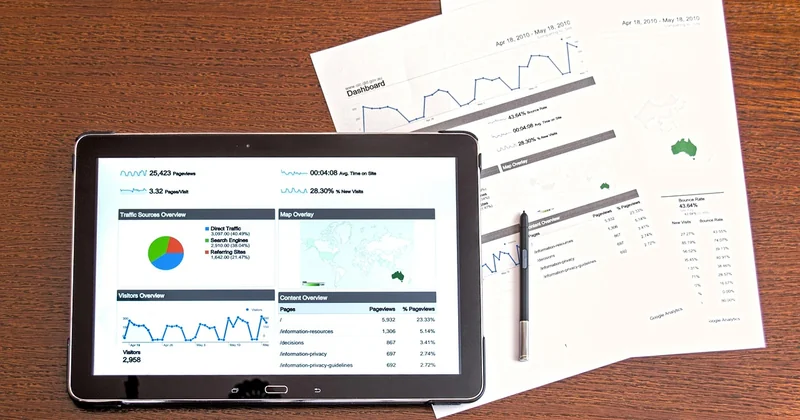
- Referring domains gained per campaign — not raw links, since one outlet can produce five links from the same article.
- Referral traffic from coverage — a link that sends no visitors may still pass equity, but traffic tells you the placement was genuinely read.
- Brand search volume — the slow indicator that PR is shifting perception, not just rankings.
- Ranking movement on target pages — tracked over 90 days, not 30.
I spent an embarrassing amount of time in my first year staring at backlink dashboards, watching the number climb while rankings barely budged. The number was real. The value wasn't, because most of those links were from pages nobody would ever link to again.
The part nobody tells you
Every failed pitch is data. The outlet that ignored your first three emails might cover your fourth if the timing is right. The story you thought was brilliant got silence; the throwaway data point got picked up everywhere.
The reason I keep coming back to this work is that it's genuinely unpredictable in the way that matters. You can't buy the moment a journalist decides your finding is the thing their readers need to know this week. You can only show up, repeatedly, with something worth their two minutes.
Which is roughly the same standard you'd apply to anything you'd want to be remembered for.